Introduction: The New Era of Environmental Regulation
India's environmental regulatory landscape has undergone a dramatic transformation. What was once a paper-based, self-reporting system has evolved into a sophisticated digital ecosystem requiring real-time data transmission, automated alerts, and continuous compliance verification.
For industries, construction sites, and businesses extracting natural resources, the message is clear: digital compliance is not optional—it's mandatory. Non-compliance no longer results in warnings or small fines; it leads to operational shutdowns, substantial penalties, and reputational damage.
This comprehensive guide explains the major environmental compliance requirements in India, why real-time monitoring has become essential, and how modern IoT solutions can help your business stay ahead of regulatory demands.
Understanding India's Environmental Regulatory Framework
The Key Regulatory Bodies
Central Pollution Control Board (CPCB) The apex environmental authority responsible for setting standards, monitoring pollution levels, and coordinating with state agencies. CPCB now mandates digital compliance through systems like ODAMS (Online Data Acquisition and Management System).
State Pollution Control Boards (SPCBs) / Committees (SPCCs) State-level agencies like HSPCB (Haryana), MPCB (Maharashtra), and others that enforce CPCB guidelines and issue consents, NOCs, and closure orders.
Central Ground Water Authority (CGWA) Operating under the Ministry of Jal Shakti, CGWA regulates groundwater extraction, issues NOCs to industries, and enforces conservation measures.
Ministry of New and Renewable Energy (MNRE) Oversees solar and renewable energy installations, including compliance with monitoring requirements under schemes like PM Surya Ghar.
Commission for Air Quality Management (CAQM) Implements Graded Response Action Plan (GRAP) for NCR and coordinates air quality management across the National Capital Region.
Municipal Authorities (BMC, MCD, etc.) Local bodies implementing air quality monitoring requirements at construction sites and managing urban environmental compliance.
Major Compliance Areas: What Every Business Must Know
1. Air Quality & Emission Monitoring Compliance
The Current Landscape
Air pollution remains one of India's most pressing environmental challenges. In 2024, India's average PM2.5 concentration was 50.6 µg/m³—nearly 11 times higher than WHO's annual guideline of 5 µg/m³. Major cities frequently experience "severe" air quality levels, triggering GRAP restrictions and intense regulatory scrutiny.
Key Requirements
For Industrial Facilities:
- Continuous Emission Monitoring Systems (CEMS) connected to ODAMS portal
- Real-time stack emissions data transmission to CPCB/SPCB servers
- Automated alerts for excess emissions
- Geotagged monitoring equipment to prevent tampering
- Data analytics to identify anomalies
For Construction Sites:
- Real-time PM2.5 and PM10 monitoring
- BMC-compliant air quality monitoring systems (per 2025 circular)
- API-based data transmission to Command & Control Centers
- LED displays showing current AQI readings
- 1-minute interval data reporting
Penalties for Non-Compliance
Recent enforcement actions show regulators mean business:
- 248 industrial units in NCR received closure orders in January 2026 for failing to migrate to ODAMS
- Complete operational shutdowns (not just fines) for digital non-compliance
- Supreme Court demands data-driven pollution control instead of assumptions
- Construction sites in Mumbai facing severe scrutiny during pollution episodes
Why Real-Time Monitoring Matters
Traditional periodic reporting allowed industries to selectively report data or delay disclosure of violations. Modern continuous monitoring systems:
- Transmit data directly to regulatory servers without third-party handling
- Include tamper-proof features like geotagging and calibration protocols
- Enable immediate regulatory response to pollution events
- Provide forensic analysis capabilities for compliance audits
- Support automated enforcement through integrated alert systems
2. Water Resource & Groundwater Compliance
The Groundwater Crisis
India faces a dual water crisis: quantity and quality. One-sixth of India's groundwater units are already over-exploited or critical. The 2025 CGWB Annual Report revealed that 440 districts (56% of India) show excessive nitrate levels—up from 359 districts in 2017.
Recent data from January 2026 shows 55% of groundwater samples tested unsafe for human consumption, with contamination from nitrates, fluoride, arsenic, heavy metals, and industrial pollutants.
CGWA Compliance Requirements
For Industries Extracting Groundwater:
- NOC (No Objection Certificate) from CGWA mandatory
- Real-time water level monitoring systems
- Automated data transmission to regulatory portals
- Documentation of extraction volumes
- Quarterly compliance reports
Penalties & Enforcement:
- Minimum fine of ₹1 lakh for unauthorized extraction
- Up to 5 years imprisonment for groundwater wastage
- Recent example: Patanjali Foods fined ₹1 lakh in December 2024
- Intensified enforcement following National Green Tribunal orders
The Business Case for Water Monitoring
Beyond compliance, groundwater monitoring provides:
- Early warning of aquifer depletion
- Optimization of water usage and cost savings
- Prevention of contamination that could halt operations
- Documentation for sustainability reporting
- Risk mitigation for water-intensive operations
3. Solar & Renewable Energy Compliance
India's Solar Boom
India is poised to become the world's second-largest solar market in 2026, with installations expected to exceed 50 GW. The country added 49 GW of renewable capacity in 2025 alone, pushing toward MNRE's ambitious 500 GW non-fossil fuel target by 2030.
With 2.4 million households already covered under PM Surya Ghar and a target of 10 million by March 2027, compliance monitoring has become a massive opportunity and requirement.
MNRE Monitoring Mandates
PM Surya Ghar Requirements (December 2025 Guidelines):
- M2M SIM-based monitoring systems mandatory for all subsidized installations
- Real-time generation data transmission to MNRE RMS (Remote Monitoring System) portal
- Data hosted exclusively on Indian servers by government agencies
- Physical meters eliminated; inverter dongles/dataloggers become primary data source
- Vendor-neutral, open communication standards required
For Utility-Scale Solar:
- Performance monitoring for grid stability
- Generation forecasting for dispatch scheduling
- Compliance with ALMM (Approved List of Models and Manufacturers) from June 1, 2026
- Quality validation for warranty compliance
Why Solar Monitoring is Critical
- Subsidy Eligibility: Non-compliant installations risk subsidy rejection
- Performance Optimization: Real-time monitoring identifies underperforming panels/inverters
- Warranty Protection: Documentation required for manufacturer claims
- O&M Efficiency: Remote diagnostics reduce site visits and downtime
- ROI Maximization: Data-driven optimization improves energy yields
The Technology Behind Compliance: IoT Monitoring Systems
What Makes Modern Monitoring Different?
Traditional compliance involved manual data collection, periodic reporting, and self-certification—all vulnerable to human error or manipulation. Modern IoT-based monitoring systems provide:
Real-Time Data Acquisition
- Continuous measurement (every 1 minute for air quality, configurable for other parameters)
- Direct sensor-to-cloud data transmission
- No human intervention in data collection or reporting
Secure Data Transmission
- End-to-end encryption (SSL/TLS protocols)
- MQTT v3.1.1 communication standards
- 4G LTE connectivity with 2G fallback
- Offline data buffering (typically 15 days) during connectivity issues
Tamper-Proof Design
- Geotagging prevents equipment relocation
- Automated calibration verification
- Anomaly detection algorithms
- Audit trails for all configuration changes
Multi-Network Connectivity
- 4G LTE for remote locations
- Wi-Fi for facilities with existing networks
- LAN/Ethernet for stable industrial environments
- LoRa for distributed sensor networks
Industrial-Grade Reliability
- IP65 weatherproof enclosures
- Wide operating temperature ranges (-30°C to +70°C typical)
- Backup power systems
- Low power consumption (<10W typical)
Industry-Specific Compliance Scenarios
Manufacturing & Industrial Facilities
Compliance Needs:
- Stack emission monitoring (ODAMS compliance)
- Ambient air quality around facility perimeter
- Groundwater extraction monitoring (CGWA compliance)
- Effluent discharge monitoring
Typical Setup:
- CEMS connected to ODAMS portal for continuous stack emissions
- Perimeter air quality stations for PM2.5, PM10, gaseous pollutants
- Water level sensors in extraction borewells with 4G transmission
- Integration with existing SCADA/DCS systems
Benefits:
- Avoid closure orders and production losses
- Early warning of equipment malfunctions
- Optimization of pollution control systems
- Regulatory audit readiness
Construction Sites
Compliance Needs:
- Real-time PM2.5 and PM10 monitoring
- BMC/municipal authority compliance
- LED displays for public visibility
- API integration with government portals
Typical Setup:
- Weatherproof air quality monitoring stations
- 3x4 ft LED displays showing real-time AQI
- 4G connectivity for data transmission
- Cloud dashboard for site managers
Benefits:
- Avoid work stoppages during GRAP restrictions
- Demonstrate environmental responsibility to clients
- Optimize dust suppression measures
- Meet tender requirements for major projects
Solar OEMs & System Integrators
Compliance Needs:
- MNRE RMS compliance for PM Surya Ghar projects
- M2M SIM-enabled inverter monitoring
- Performance tracking for O&M contracts
- Multi-site fleet management
Typical Setup:
- RS-485 Modbus dongles connected to inverters
- 4G LTE transmission to MNRE RMS and private cloud
- Dashboard for performance analytics
- Mobile apps for field technicians
Benefits:
- Ensure subsidy eligibility for residential installations
- Remote troubleshooting reduces site visits by 70%
- Predictive maintenance based on performance data
- Unified view of geographically dispersed portfolios
Water-Intensive Industries
Compliance Needs:
- CGWA NOC compliance
- Real-time extraction monitoring
- Water quality tracking
- Usage optimization
Typical Setup:
- Submersible water level sensors
- Flow meters for extraction volumes
- 4G IoT gateways for data transmission
- Integration with water management systems
Benefits:
- Avoid ₹1 lakh+ penalties for unauthorized extraction
- Early warning of aquifer depletion
- Optimize water usage and reduce costs
- Support water stewardship reporting
The Business Case: Compliance vs. Cost of Non-Compliance
The True Cost of Non-Compliance
Immediate Financial Impact:
- Operational shutdowns (complete revenue loss)
- Regulatory fines and penalties
- Legal costs and administrative burden
- Emergency compliance implementation (rushed, expensive)
Long-Term Business Impact:
- Supply chain disruption and contract penalties
- Customer loss due to unreliable deliveries
- Difficulty securing environmental clearances for future projects
- Reduced credit ratings and increased financing costs
- Reputational damage affecting brand value
Hidden Costs:
- Management time diverted to crisis management
- Employee morale impact during shutdowns
- Competitive disadvantage vs. compliant competitors
- Lost opportunities due to tender disqualifications
The ROI of Proactive Compliance
Direct Financial Returns:
- Avoid shutdown losses (for a medium-sized manufacturing unit: ₹50 lakh - ₹5 crore per day)
- Prevent fines (ranging from ₹1 lakh to ₹1 crore+)
- Optimize resource usage (energy, water) through data insights
- Reduce manual monitoring costs
Operational Efficiency:
- Remote monitoring eliminates site visits for routine checks
- Automated alerts enable proactive maintenance
- Data-driven decision making improves process efficiency
- Integration with existing systems enhances overall operations
Strategic Advantages:
- Regulatory audit readiness (no scrambling for documentation)
- Enhanced sustainability reporting and ESG credentials
- Competitive advantage in tenders requiring compliance proof
- Improved stakeholder confidence (investors, customers, communities)
Typical Payback Period: For most industrial facilities and construction sites, the investment in IoT monitoring systems pays back within 6-18 months through:
- Avoided penalties and shutdowns
- Operational efficiency gains
- Reduced manual monitoring costs
- Optimized resource consumption
Choosing the Right Monitoring Solution
Key Evaluation Criteria
1. Regulatory Compliance
- Does it meet specific requirements (ODAMS, BMC, CGWA, MNRE RMS)?
- Is it certified or approved by relevant authorities?
- Does it support required communication protocols?
- Can it integrate with government portals?
2. Technical Specifications
- Sensor accuracy and reliability
- Data transmission frequency and security
- Connectivity options (4G, Wi-Fi, LAN, LoRa)
- Weather resistance (IP rating)
- Operating temperature range
- Power consumption and backup options
3. Scalability & Integration
- Can it grow with your operations?
- Does it integrate with existing systems (SCADA, ERP, etc.)?
- Supports multiple sites/locations?
- API availability for custom integrations
4. Support & Maintenance
- Installation and commissioning support
- Calibration and maintenance services
- Technical support response times
- Software updates and upgrades
- Training for your team
5. Total Cost of Ownership
- Initial hardware costs
- Installation and commissioning
- Connectivity charges (SIM cards, data plans)
- Ongoing maintenance and calibration
- Software/cloud platform fees
Implementation Best Practices
Phase 1: Assessment & Planning
Regulatory Requirements Analysis
- Identify all applicable regulations for your industry and location
- Document specific compliance requirements and deadlines
- Assess current compliance status and gaps
- Prioritize based on risk and regulatory timelines
Site Survey & Technical Assessment
- Physical location assessment for equipment installation
- Connectivity evaluation (cellular signal strength, Wi-Fi availability)
- Power availability and backup requirements
- Integration points with existing systems
- Environmental conditions (temperature, dust, moisture)
Stakeholder Alignment
- Operations team understanding of monitoring requirements
- IT/OT team involvement for system integration
- Finance team approval and budgeting
- Regulatory affairs team documentation requirements
Phase 2: Solution Selection & Design
Vendor Evaluation
- Regulatory compliance credentials
- Technical capabilities and reliability
- Industry experience and references
- Support infrastructure and responsiveness
- Total cost of ownership
System Design
- Number and location of monitoring points
- Sensor specifications and accuracy requirements
- Data transmission architecture
- Dashboard and reporting requirements
- Integration with existing systems
Compliance Verification
- Confirm solution meets all regulatory specifications
- Validate data formats and transmission protocols
- Test integration with government portals
- Document compliance evidence
Phase 3: Deployment & Commissioning
Installation
- Professional installation following manufacturer guidelines
- Proper mounting and weatherproofing
- Power and connectivity setup
- Initial calibration and configuration
Testing & Validation
- End-to-end connectivity testing
- Data transmission verification to government portals
- Alert and notification testing
- User acceptance testing
Training & Documentation
- Operator training on monitoring dashboards
- Maintenance team training on equipment care
- Documentation of installation, configuration, and procedures
- Emergency response protocols
Phase 4: Operations & Optimization
Continuous Monitoring
- 24/7 automated data transmission
- Real-time alert monitoring and response
- Regular data review for operational insights
- Compliance documentation maintenance
Maintenance & Calibration
- Scheduled preventive maintenance
- Regular calibration per manufacturer recommendations
- Equipment health monitoring
- Spare parts inventory management
Optimization
- Analyze data trends for operational improvements
- Optimize pollution control systems based on monitoring data
- Adjust processes to reduce environmental impact
- Leverage data for sustainability reporting
Ubiqedge: Your Partner for Complete Environmental Compliance
At Ubiqedge, we specialize in industrial-grade IoT monitoring solutions designed specifically for India's regulatory environment. Our comprehensive product portfolio addresses all major compliance areas:
Our Solutions
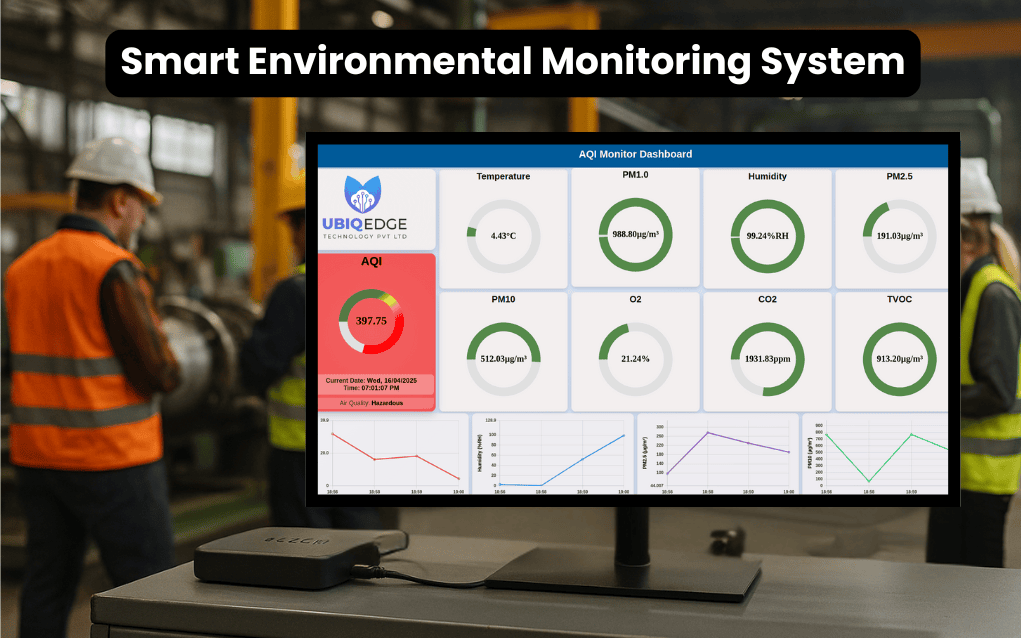
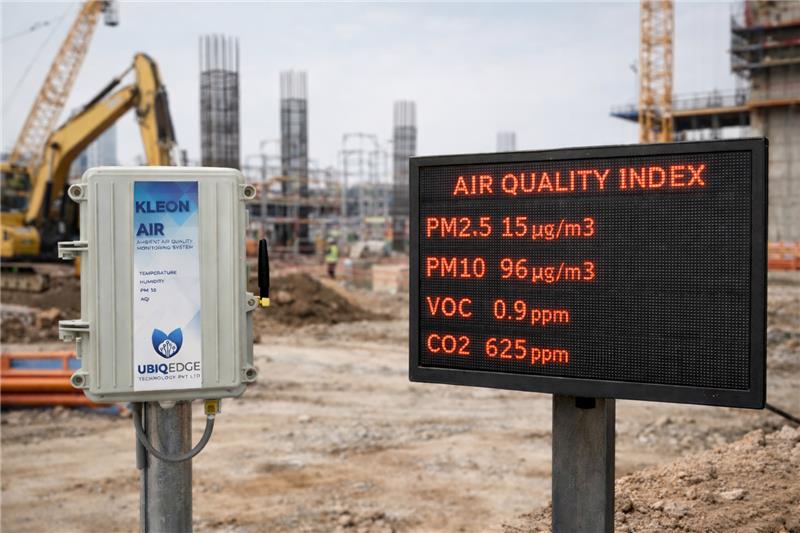
KLEON AIR - Air Quality Monitoring System
- BMC & CPCB compliant
- Real-time PM2.5, PM10, temperature, humidity, gaseous parameters
- 4G LTE connectivity with API integration
- IP65 weatherproof enclosure
- LED display options (3x4 ft outdoor displays)
- Plug-and-play deployment
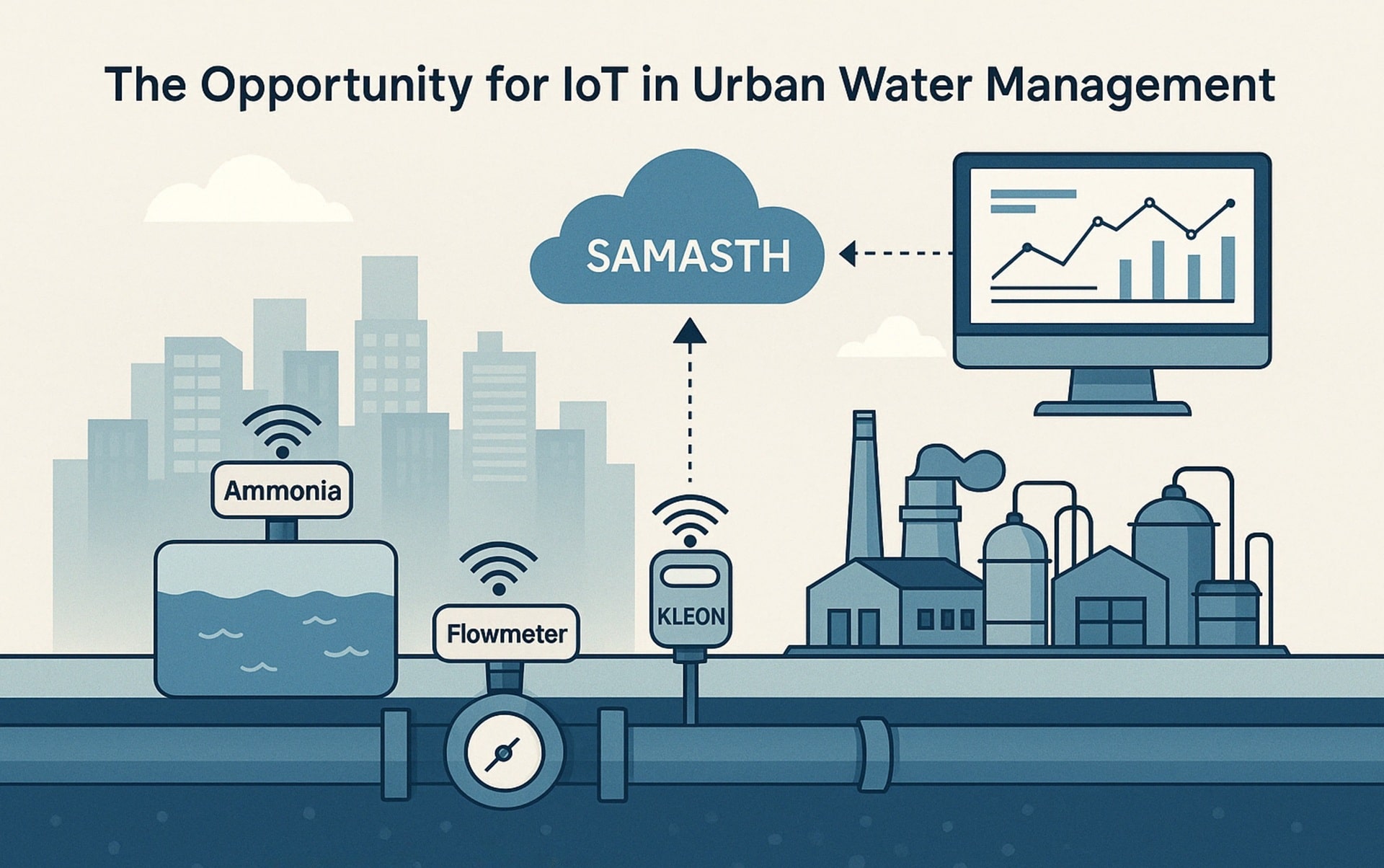
- Cloud platform (SAMASTH) for analytics and reporting
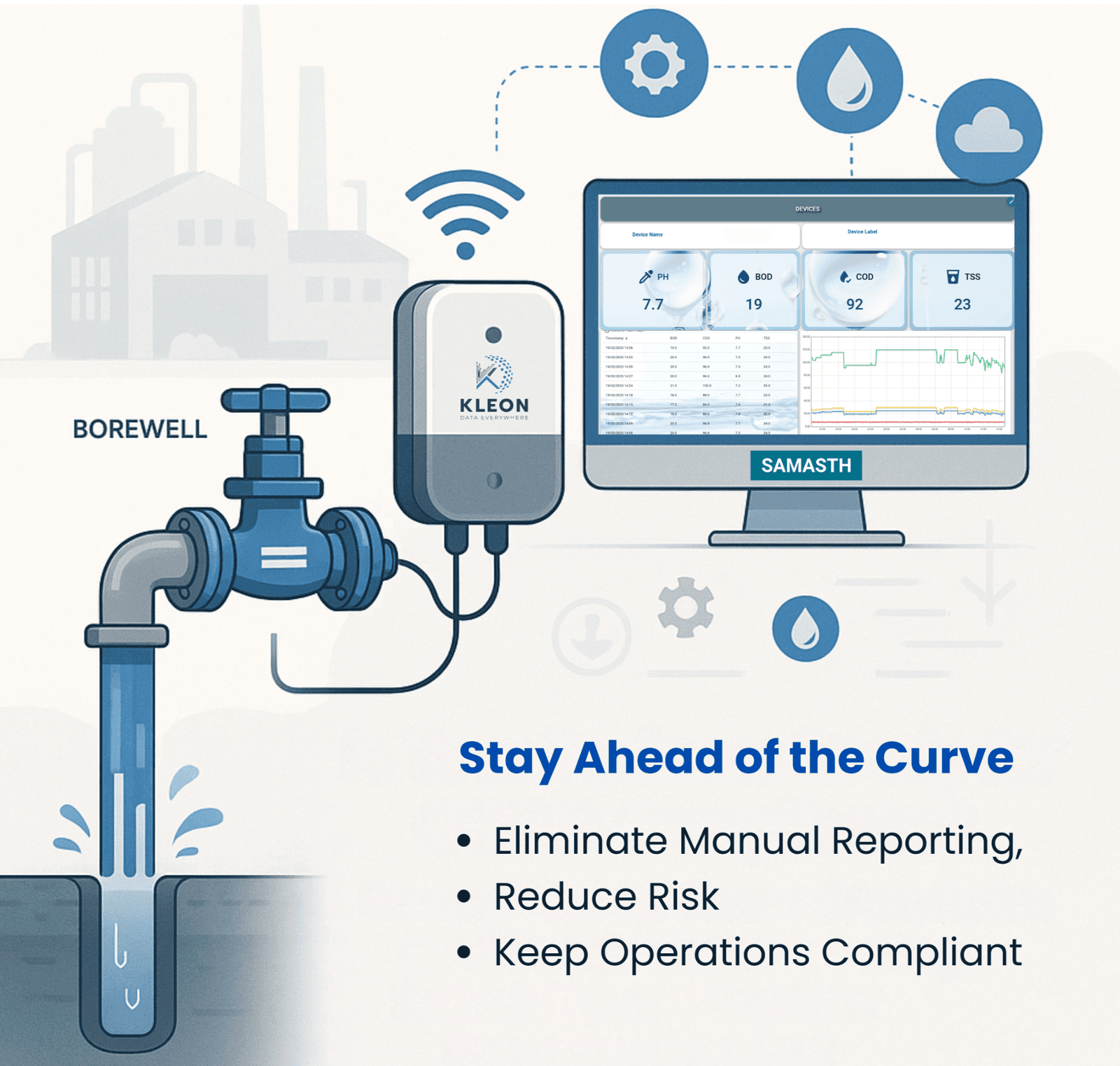
KLEON Water Monitoring System
- CGWA compliant real-time water level monitoring
- RS-485 connectivity with Modbus support
- 4G data transmission with 15-day offline storage
- IP65 protection for outdoor installations
- Multi-network support (4G, Wi-Fi, LAN)
- Integration with water management systems
KLEON 4G Solar Inverter Monitoring Dongle + SAMASTH Platform
- MNRE PM Surya Ghar compliant
- M2M SIM enabled for RMS integration
- Universal inverter compatibility (RS-485 Modbus)
- Native data push to MNRE RMS portal
- SSL/TLS encrypted transmission
- Remote diagnostics and troubleshooting
- Fleet management dashboard
Emission Monitoring Solutions
- ODAMS-ready continuous emission monitoring
- Real-time stack emissions tracking
- Automated alert systems
- Geotagged equipment with anti-tampering features
- Integration with industrial SCADA systems
Why Choose Ubiqedge?
Regulatory Expertise Deep understanding of CPCB, SPCB, CGWA, MNRE, and BMC requirements across all compliance areas.
Industrial-Grade Technology Robust, reliable systems designed for 24/7 operation in harsh industrial environments with IP65 protection and wide temperature ranges.
Proven Track Record Successfully deployed across diverse industries, geographies, and regulatory scenarios with 2000+ satisfied clients.
Comprehensive Support From initial assessment through long-term operations:
- Pre-sales consultation and site surveys
- Professional installation and commissioning
- Training for your teams
- 24/7 technical support
- Preventive maintenance programs
- Software updates and upgrades
Single-Point Accountability Complete solutions from hardware to cloud platforms, eliminating finger-pointing between multiple vendors.
Future-Ready Architecture Scalable solutions that grow with your business and adapt to evolving regulatory requirements.
Conclusion: The Path Forward
Environmental compliance in India has evolved from a bureaucratic checkbox to a technology-driven business imperative. The regulatory environment demands real-time, automated, tamper-proof monitoring systems that provide continuous visibility to authorities.
For businesses, the choice is clear:
- Proactive compliance through modern IoT monitoring systems that prevent violations before they occur
- Reactive crisis management dealing with shutdowns, penalties, and reputational damage
The investment in proper monitoring infrastructure is not just about avoiding penalties—it's about operational resilience, efficiency optimization, sustainability credentials, and long-term business viability.
As regulations continue to tighten and enforcement becomes more sophisticated, the gap between compliant and non-compliant businesses will only widen. Those who invest in robust monitoring systems today will be best positioned for success tomorrow.
Take Action Today
Don't wait for a closure order or penalty to force your hand. Assess your compliance status now and implement the monitoring systems your business needs.
Ready to ensure compliance and optimize operations?
📧 Email: sales@ubiqedge.com 📞 Phone: +91 7738986783 🌐 Website: www.ubiqedge.com
Visit our office: 107, 109, A-Wing, Solaris 1, Saki Vihar Rd, Powai, Mumbai, Maharashtra 400072
Schedule a free consultation to:
- Assess your specific compliance requirements
- Understand which monitoring systems you need
- Get a detailed implementation roadmap
- Receive a comprehensive quote
Ubiqedge Technologies Private Limited Simplifying IoT Adoption for All © 2026 Ubiqedge Technologies. All rights reserved